How to choose a one-piece swimsuit for your body type
Necklines, straps, ruching, and skirts each change how a one-piece fits and feels. How to measure, what each detail does, and how to check the fit.
By 3Commerce editors5 min read
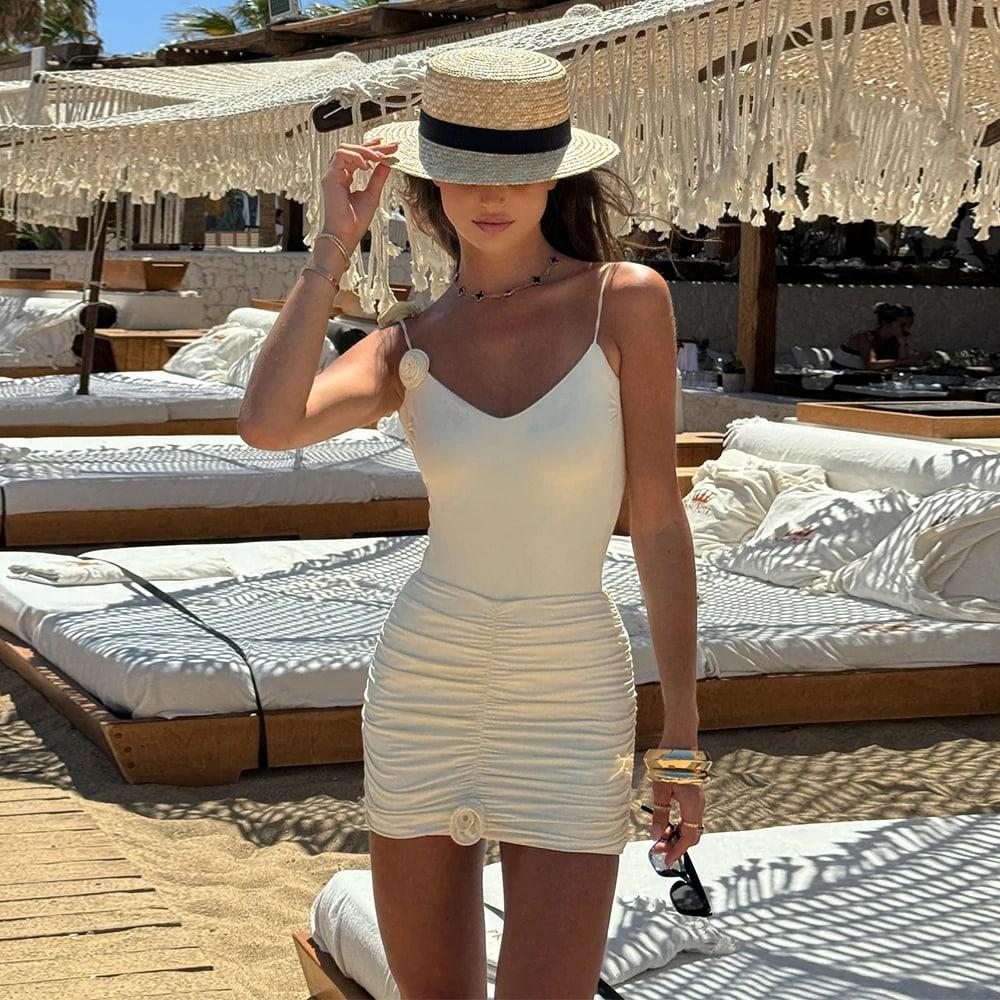
There is no swimsuit rule that says 1 body shape must wear 1 cut. What matters is what you want the suit to do. Maybe you want more support at the bust, more coverage at the hips, a defined waist, or a suit that stays put while you swim. Each of those comes down to a few details: the neckline, the straps, the fabric, and how the suit is cut through the middle. This guide explains each one, so you can read a product page and know what you are getting.
Measure before you shop
A one-piece has to fit your bust, waist, and hips, and the length of your torso too. That last one is why a suit can fit everywhere and still pull at the shoulders. Take 4 measurements with a soft tape:
- Bust: around the fullest part, with the tape level across your back.
- Waist: around the narrowest part, usually just above the belly button.
- Hips: around the fullest part of your seat.
- Torso: from the top of 1 shoulder, down the front, between your legs, and back up to the same shoulder. This is sometimes called the torso loop or girth.
Compare those numbers with the size chart on each product page, not with the size you buy in dresses. Swimwear sizes vary from 1 maker to the next, and many pieces in our women’s swimwear range list a bust range for each size. Several also list the body length of the suit, which you can check against your torso measurement. If you fall between 2 sizes, pick the size that fits your longest measurement, since a suit that is too short is harder to live with than one that is a little loose.
Necklines and straps
The top of a swimsuit does most of the work of support. Here is how the common styles compare.
- Halter. The straps tie or fasten behind the neck, which lifts the bust and lets you adjust the fit. Mareva pairs a halter-style neck with adjustable straps and a ruched body.
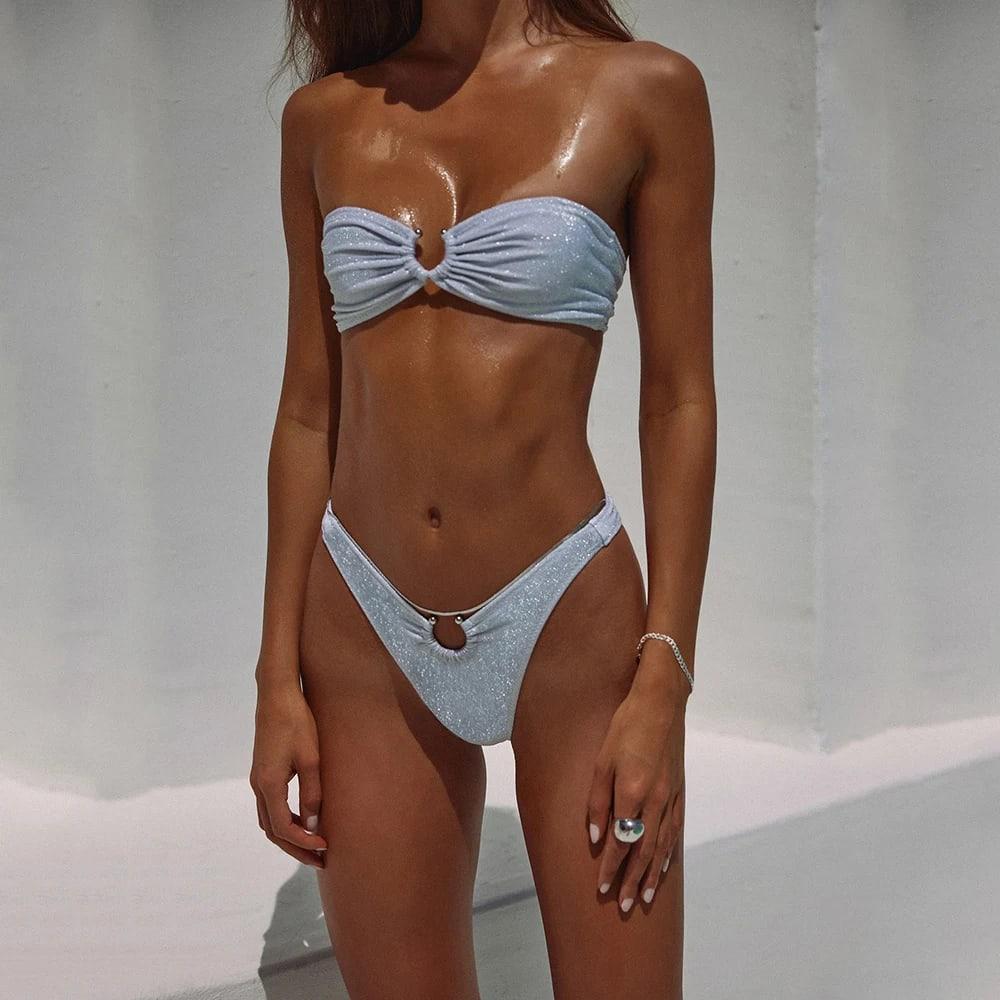
- Bandeau. A straight neckline with no straps, or with straps you can remove. It avoids tan lines but gives the least lift. Lido adds adjustable shoulder straps for more hold.
- V-neck and plunge. A deep V draws the eye down and lengthens the neck. It suits a smaller bust well, and on a fuller bust it needs a firm fit at the sides.
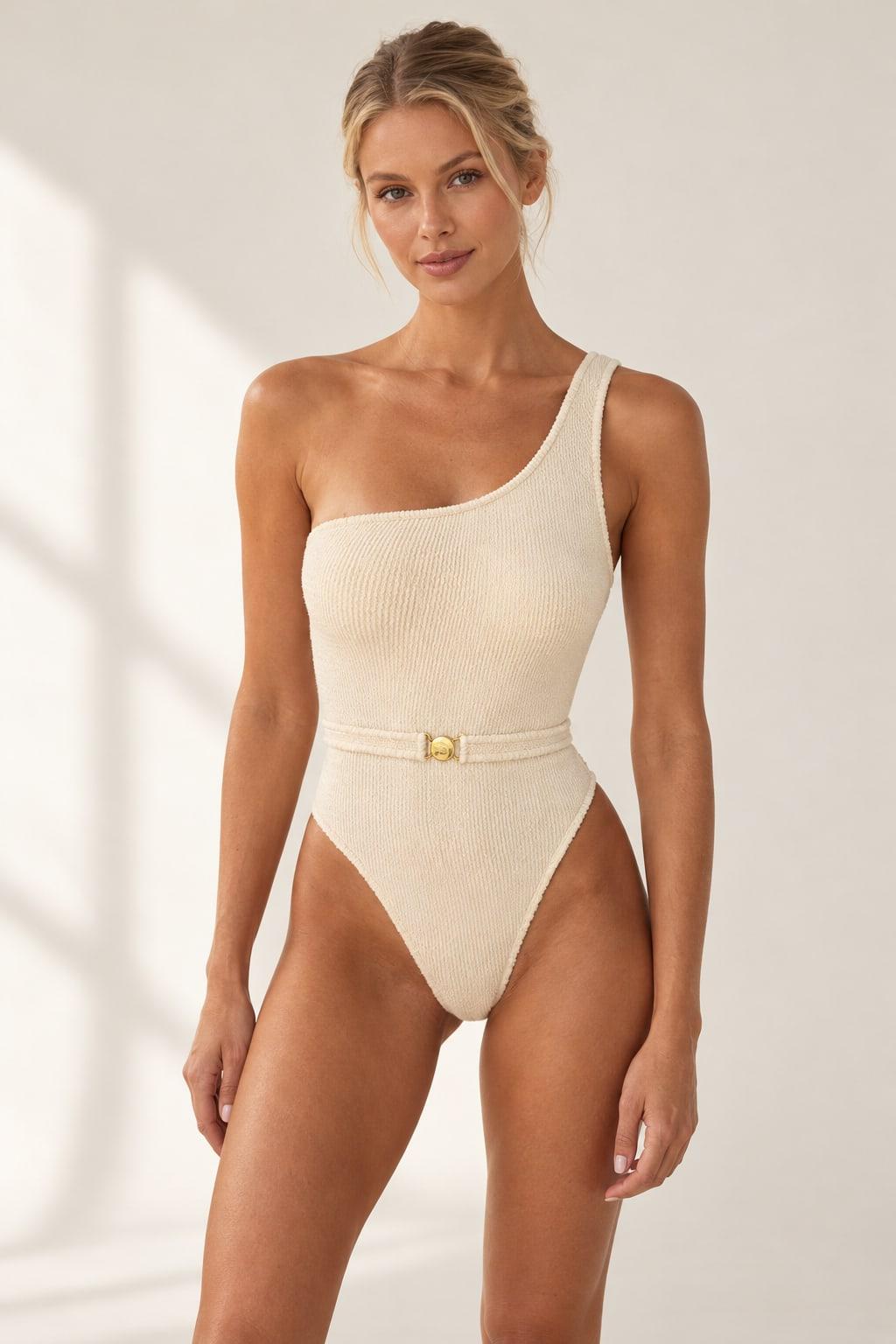
- One-shoulder. An asymmetric line that looks dressed up. With only 1 strap, choose a snug fit. Amalfi adds a belt at the waist and a high-cut leg.
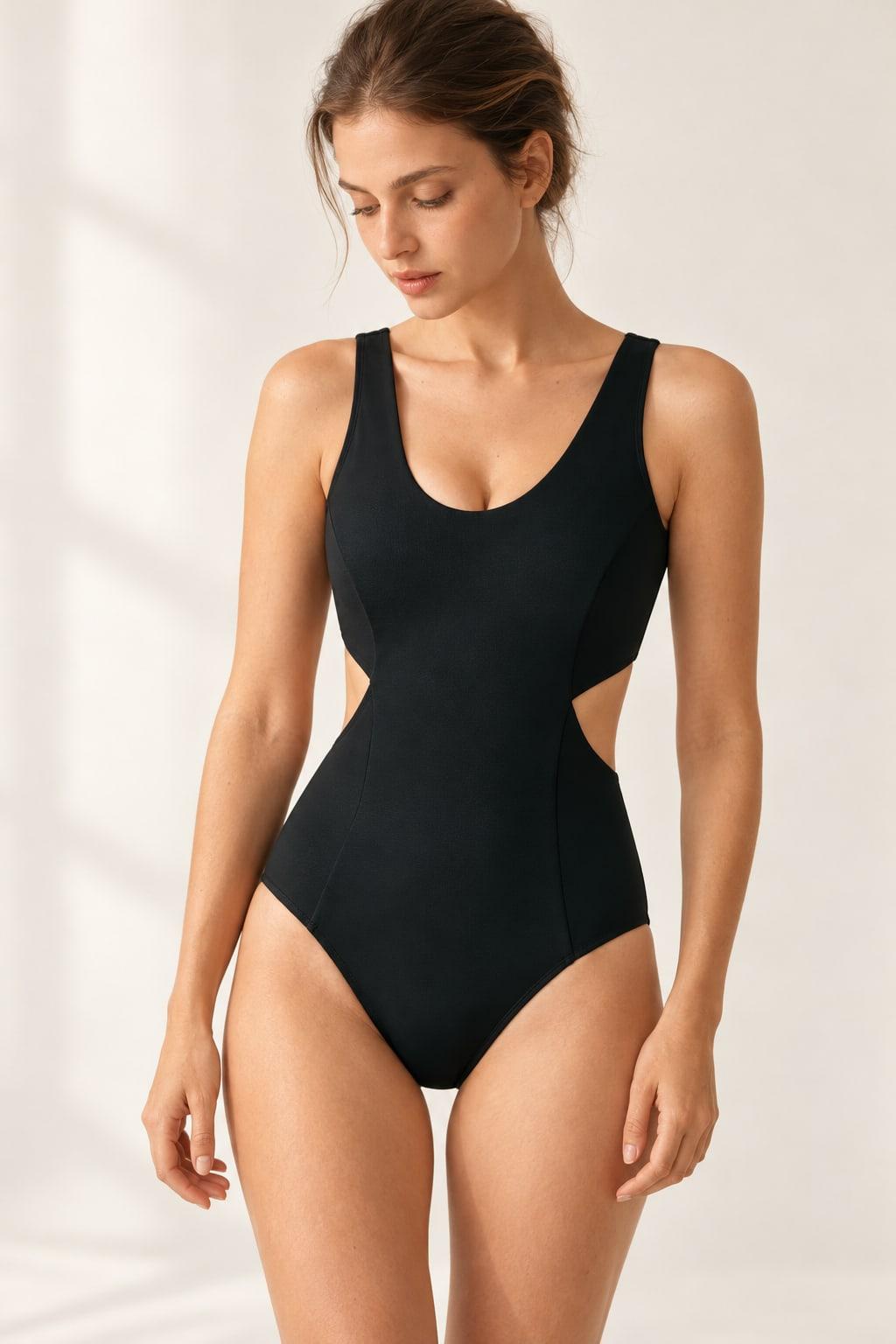
- Racerback and cross-back. Straps that meet or cross between the shoulder blades stay on the shoulders while you swim. Lidia uses a racerback for that reason.
Check whether the straps adjust. Fixed straps are fine when your torso is close to the average for your size. If you have a long or short torso, adjustable straps let you take up or let out the slack, which is often the difference between a suit that fits and one that does not.
Match the details to what you want
More support at the bust
Look for wide or adjustable straps, a halter neck, and built-in or removable padding. Marina has wide straps, a scoop neck, and removable padding. A bandeau with no straps is the hardest style to wear if you want lift.
A defined waist
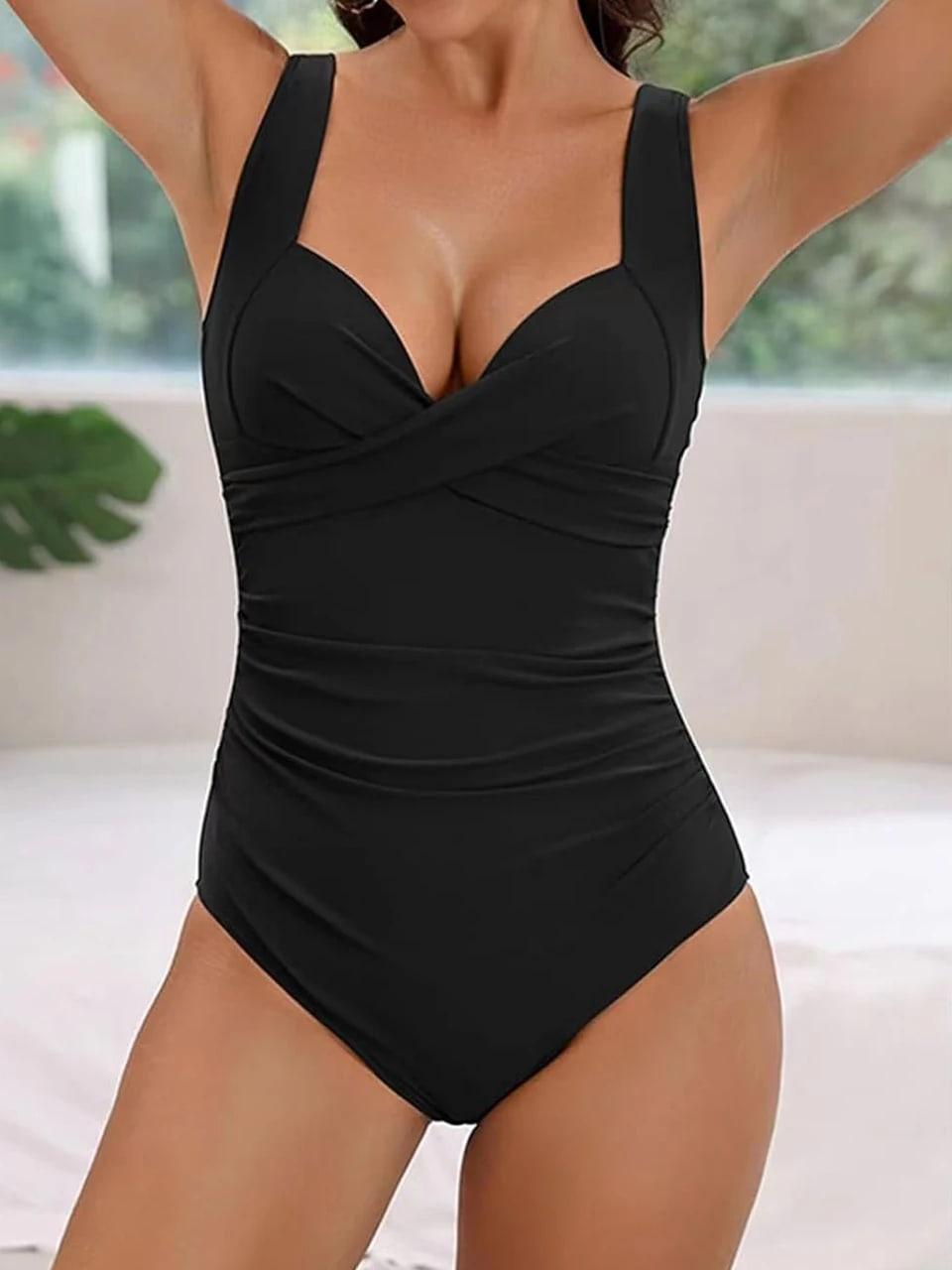
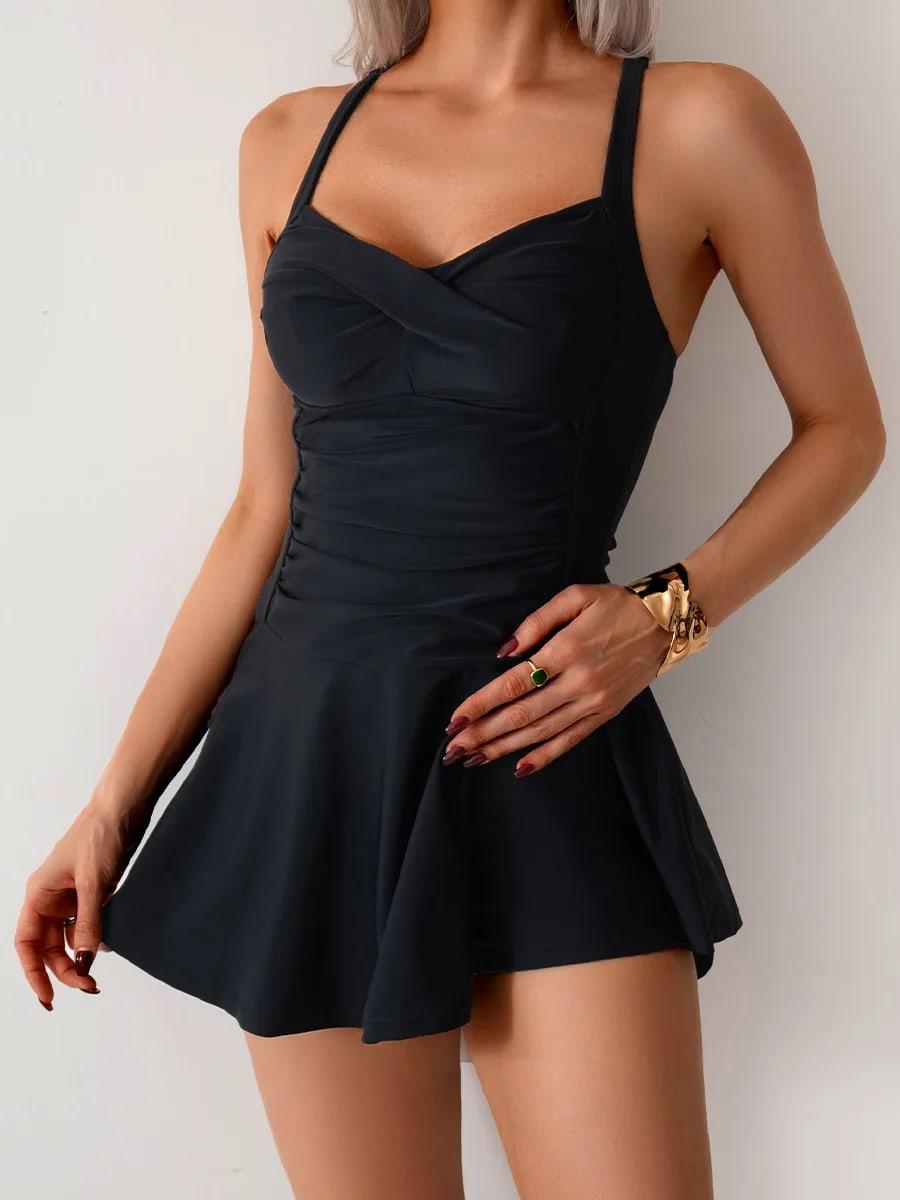
Ruching, a twist front, and a belt all add shape through the middle. Ruched fabric also hides small creases when you sit. A belted suit like Amalfi creates a waist by itself.
More coverage at the hips
A skirted one-piece adds a short layer over the hips and seat. Tessaly has a pleated skirt and a halter neck. A regular leg line, rather than a high-cut one, also gives more coverage.
Longer-looking legs
A high-cut leg shows more of the hip and makes the legs look longer. It suits most heights, and it is a common choice for shorter frames.
More sun coverage
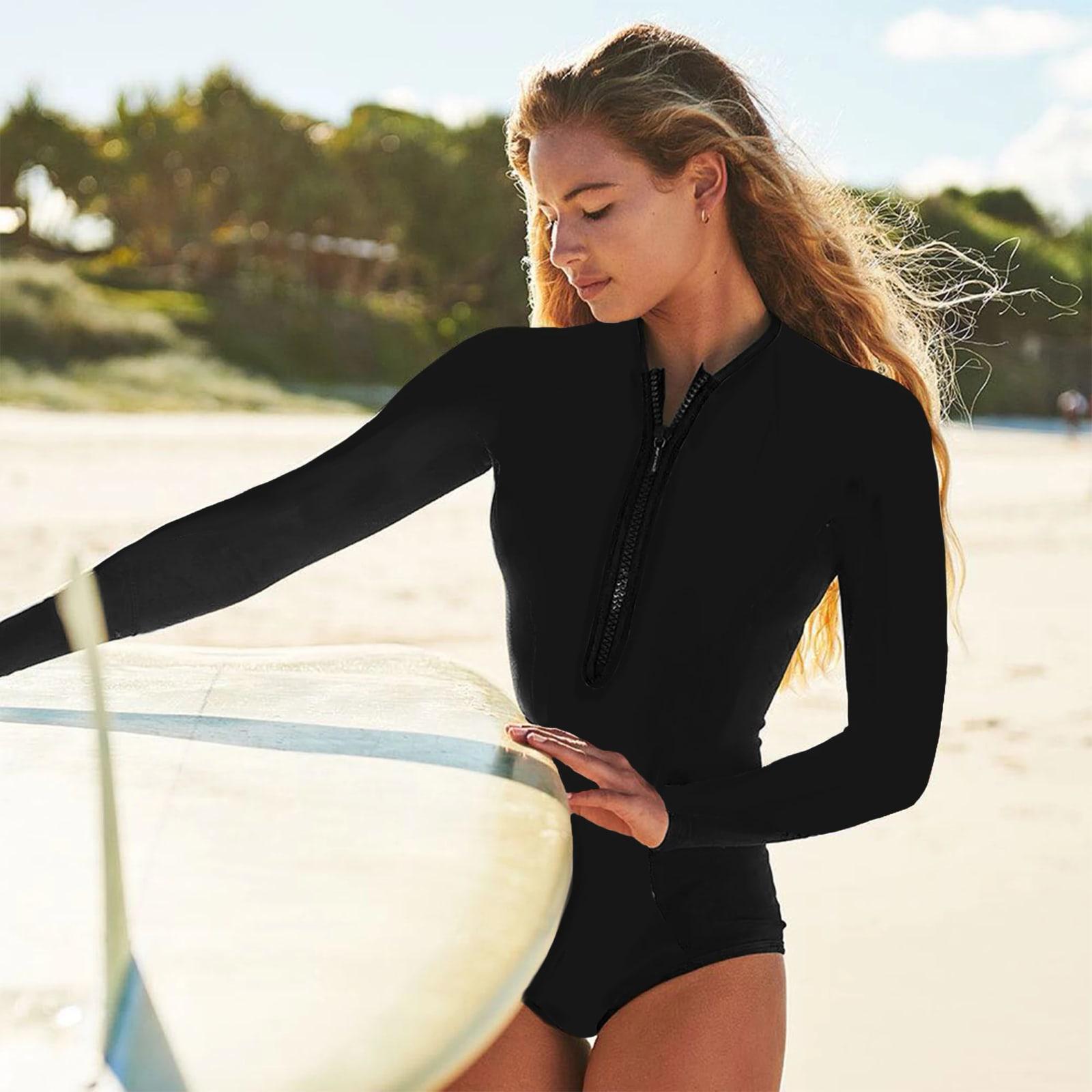
A long-sleeve suit like Sandpiper covers the arms and shoulders. Its listing does not state a UPF rating, so still wear sunscreen on any skin the fabric does not cover.
Fabric and color
Most swimsuits are polyester or polyamide (nylon), blended with elastane for stretch. Elastane is what lets a suit hug the body and spring back. Ruching and textured knits forgive more than a smooth, thin fabric. Darker solids show less of what is underneath, and very light colors can turn see-through when wet, so check whether a pale suit is lined.
Prints are a matter of taste. A small, busy print hides creases well. A bold, large print draws attention to wherever it sits. Color blocking, where 2 colors meet at the sides, can make the middle look narrower.
For swimming laps
If you swim for exercise, choose a racerback or cross-back, straps that do not adjust or slip, and a regular leg. Skip loose skirts, belts, and large cutouts, which drag in the water. Polyester holds up to chlorine better than most nylon blends.
Check the fit when it arrives
- Try it on dry, with the hygiene liner in and the tags on.
- Raise your arms above your head. The suit should stay in place at the bust.
- Bend forward and sit down. Nothing should dig in at the shoulders or ride up at the seat.
- Look for gaps at the neckline or the sides, which mean the suit is too big.
- Remember that wet fabric relaxes a little, so a suit should feel snug when dry.
Make it last
- Rinse it in cold fresh water after every swim.
- Wash it by hand with a mild detergent, and skip fabric softener.
- Press out the water in a towel. Do not wring it.
- Dry it flat in the shade, never in a hot dryer.
Questions people ask
Should a one-piece swimsuit be tight?
It should be snug but not tight. It should lie flat against the body with no gaps, and leave no deep marks on the shoulders or the legs.
Why does my swimsuit pull at the shoulders?
The body of the suit is too short for your torso. Try a size up, a suit with adjustable straps, or a halter that ties at the neck.
Can I swim laps in a skirted swimsuit?
You can, but a skirt adds drag. It is better for the beach and the pool deck than for training.
Prefer 2 pieces? Our guide to bikini styles explains each top and bottom.