Bikini styles explained: triangle, bandeau, balconette, high-waist, and more
What each bikini top and bottom is called, how much support and coverage it gives, and how to put together a set that fits you.
By 3Commerce editors5 min read
Bikini names can be confusing. A "triangle" and a "halter" can look alike, and "cheeky", "Brazilian", and "thong" describe 3 different bottoms. Once you know the terms, you can pick a top for the support you want and a bottom for the coverage you want, and the set will work for you. Here is what each style means.
Bikini tops
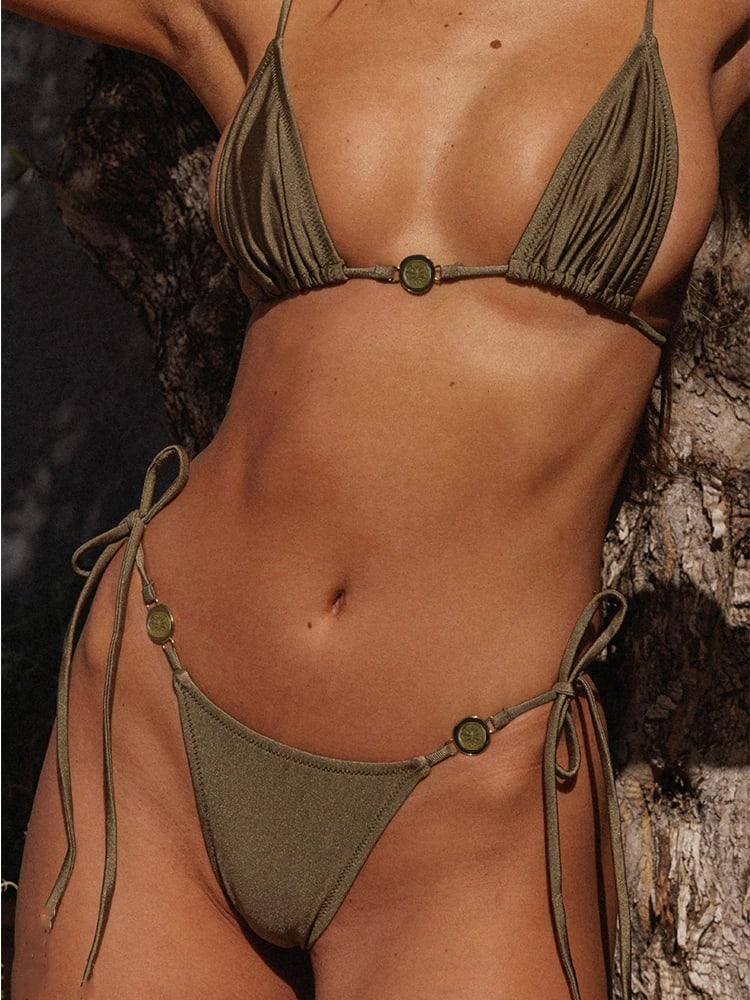
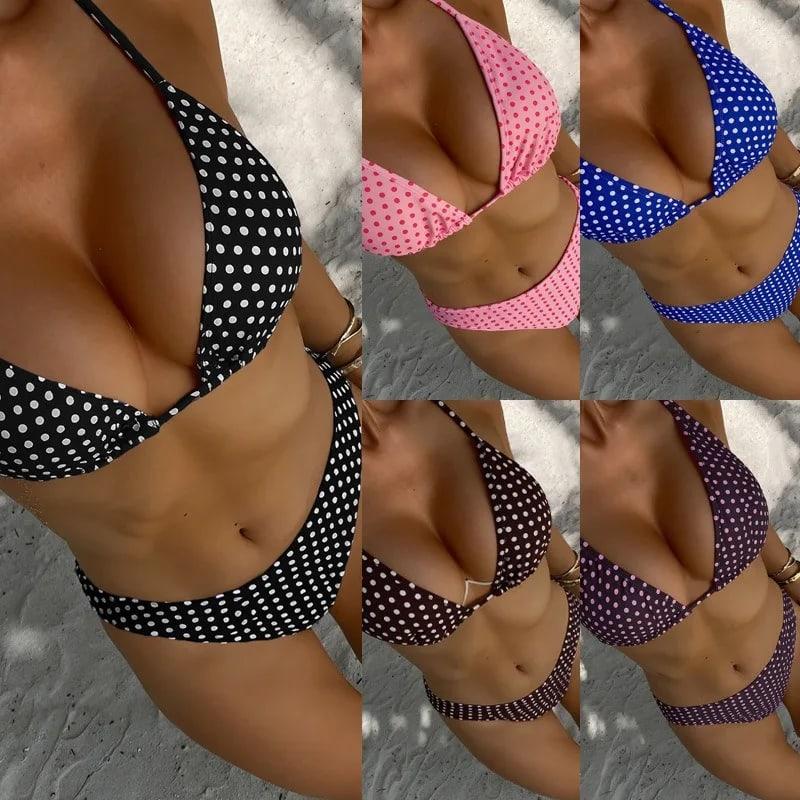
Triangle
The classic: 2 triangles of fabric with thin straps that tie at the neck and the back. Because you set the ties yourself, it fits a wide range of sizes. It gives light support, so it suits smaller and medium busts best. Azalea is a padded, wire-free triangle with a string neck tie.
Underwire
A wire under each cup, like an everyday bra. It gives the most lift and shape, and it is the top to look for if you want support for a fuller bust. Pavia is an underwire triangle with built-in padding.
Halter
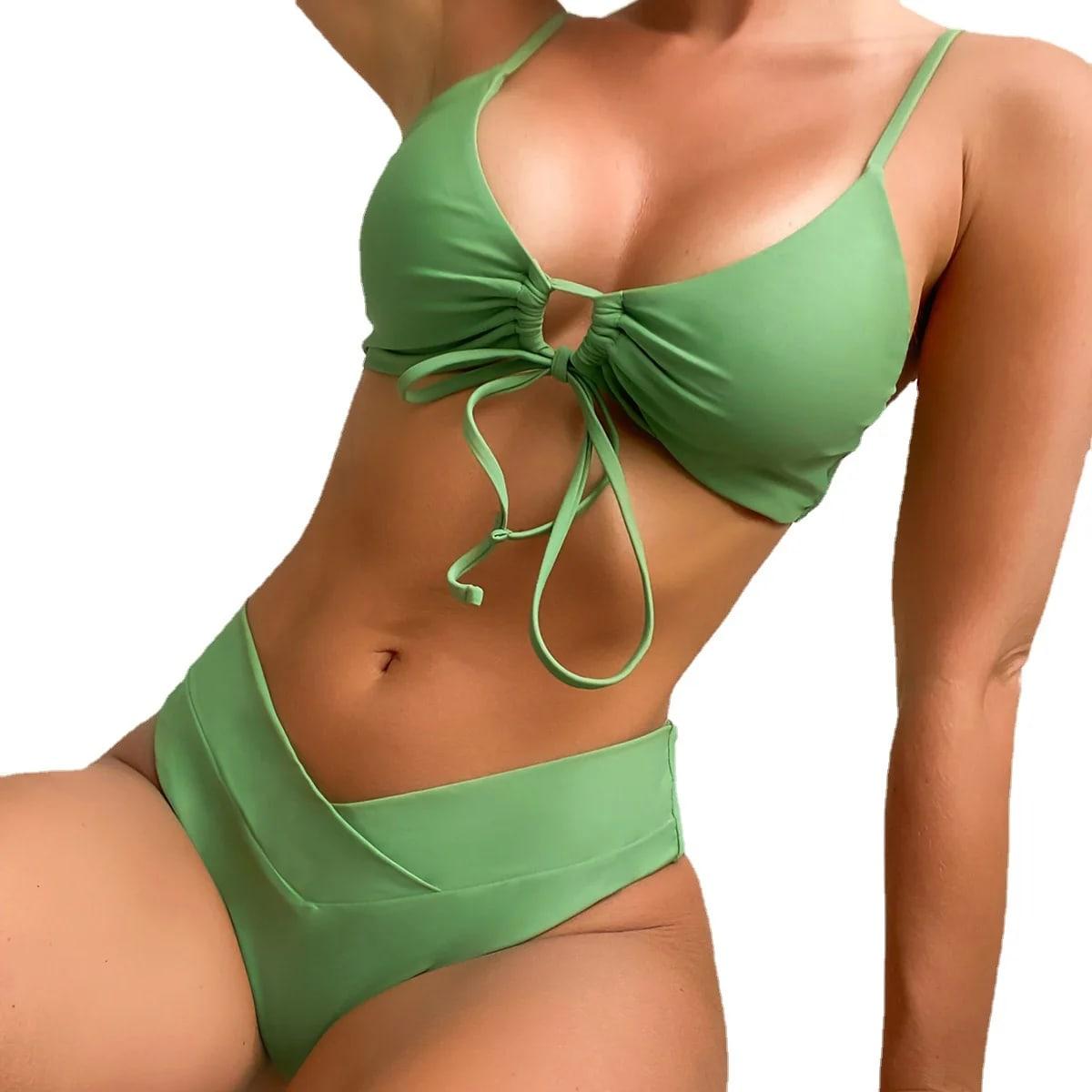
The straps go up and around the back of the neck, which lifts the bust and keeps the top in place. Many halters have wider cups than a classic triangle. Ginny is a padded halter with lace-up detail.
Bandeau
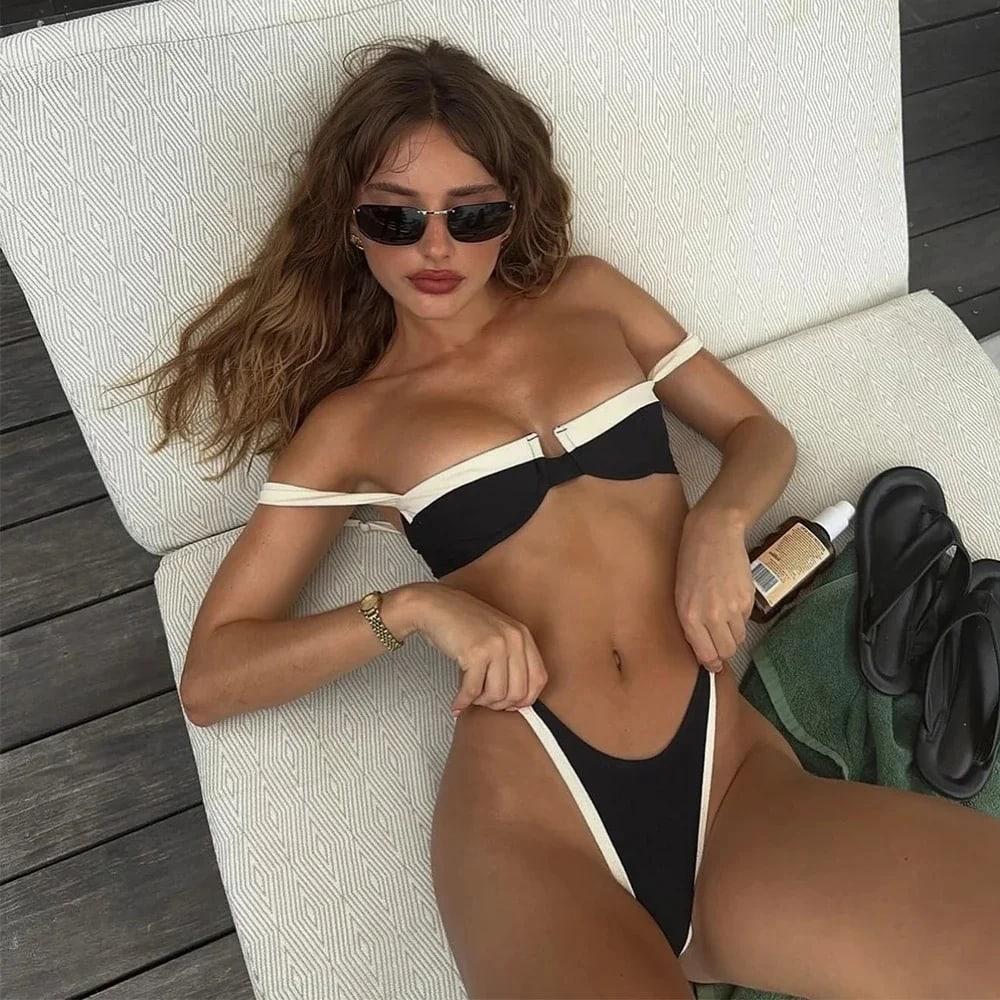
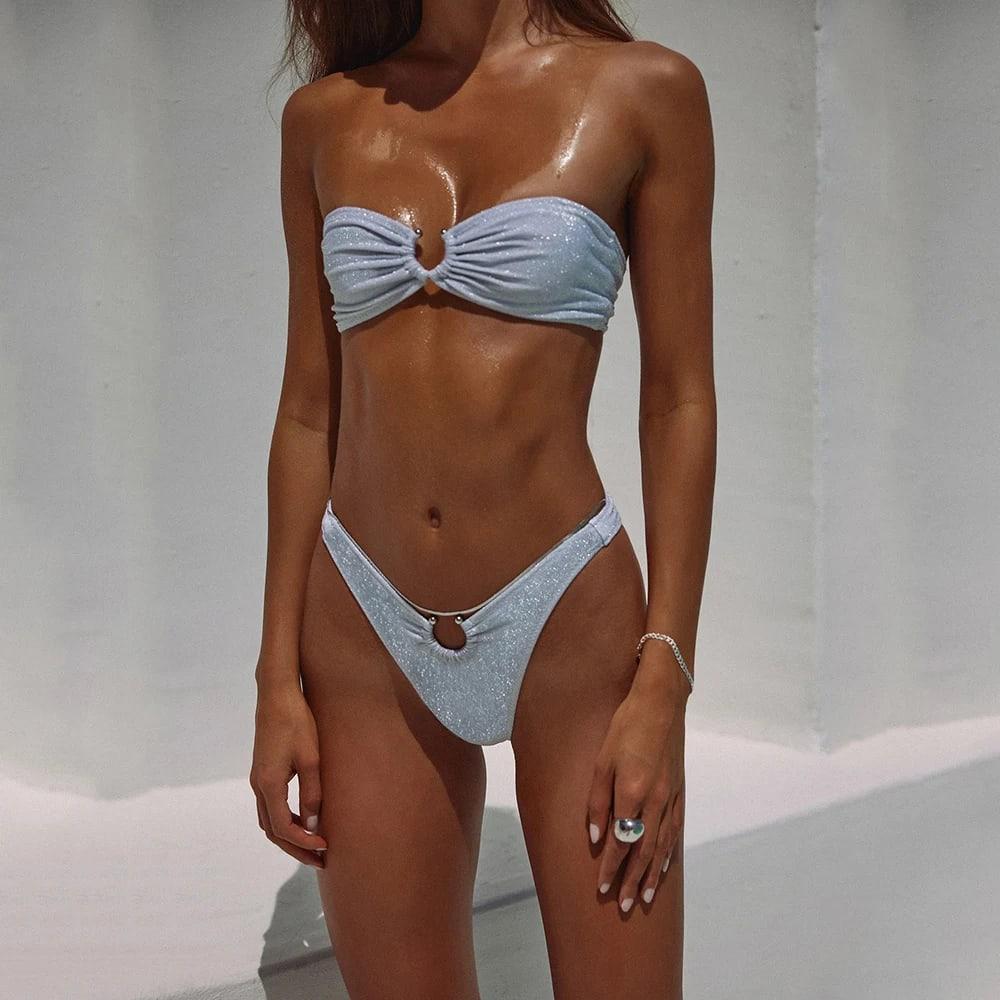
A strapless tube of fabric across the bust. It leaves no strap tan lines and looks clean under an open shirt. It gives the least lift, so look for padding and a firm band. Tawny, Marisol Reef, and Mareta are padded, wire-free bandeaus.
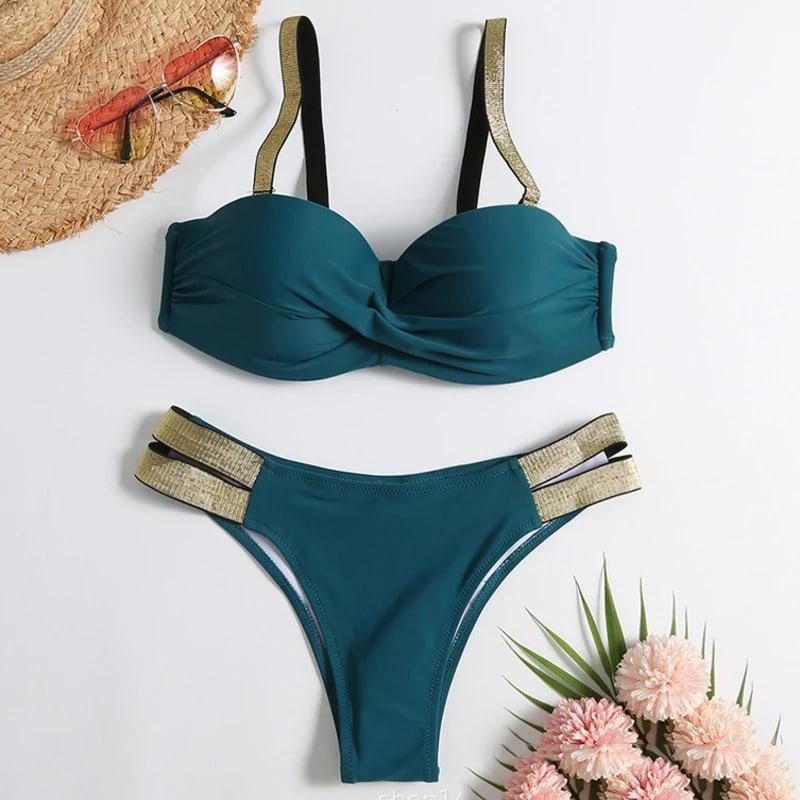
Balconette
Cups cut low and wide, with a fairly straight top edge and straps set toward the outside of the shoulders. Most balconettes have an underwire. The shape lifts from below and shows a little cleavage, and it suits a medium to full bust. If you like the lift but not the wire, a padded, wire-free top with a straight neckline is the nearest match.
Push-up and one-shoulder
A push-up top has thicker padding at the base of the cup to add volume. A one-shoulder top has a single strap and an asymmetric line, which looks dressed up but gives less support than 2 straps.
Bikini bottoms
High-waist
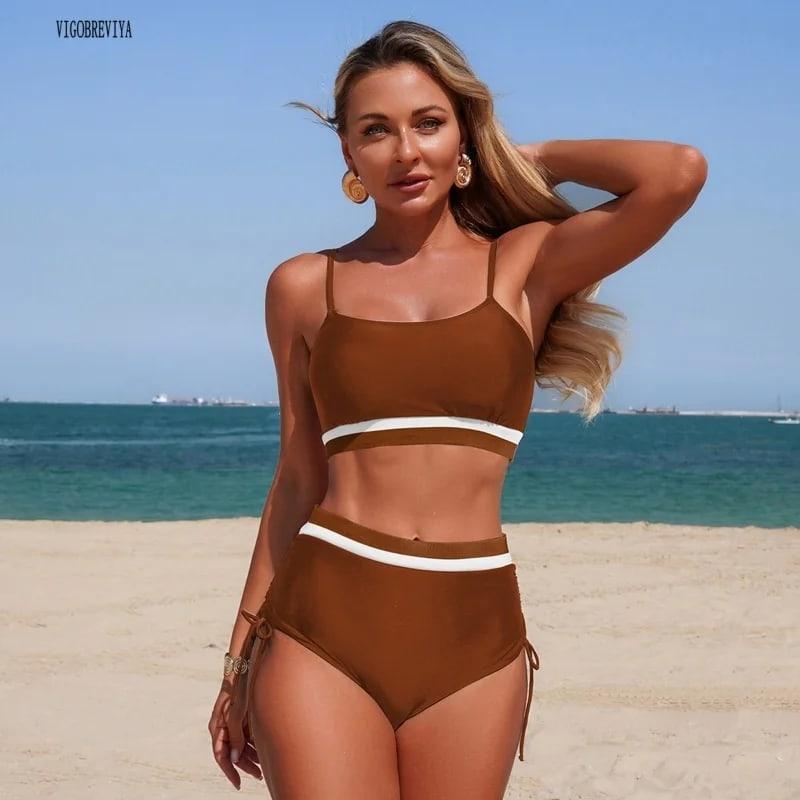
Sits at or above the belly button. It gives the most coverage of any bikini bottom and has a retro look. Tahiti has a high-waist bottom with a padded, square-neck top. Tesoro adds lace-up detail at the waist.
Low-waist and hipster
Sits low on the hips, with moderate coverage at the back. It is the most common bikini bottom and pairs with every top.
String and tie-side
Ties at each hip, so you can loosen or tighten the fit. Tie sides help when your hips fall between 2 sizes.
Cheeky, Brazilian, and thong
These cut away more fabric at the back, in that order. A cheeky bottom shows part of the seat. A Brazilian, like Cayo, shows more. A thong leaves only a narrow strip.
Tankinis and skirted sets
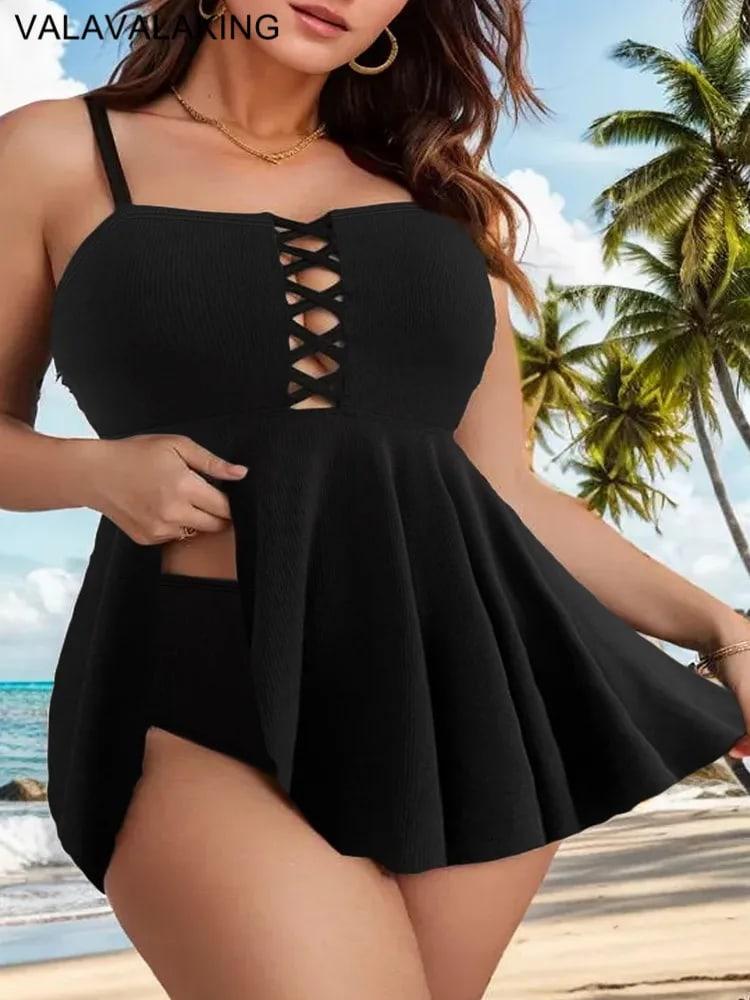
A tankini is a bikini with a longer top that covers the stomach, so you get the ease of 2 pieces with the coverage of a one-piece. Pacifica pairs a racerback tankini top with a skirt-style bottom, in sizes XL to 5XL. Many bikini sets also come with a matching skirt or cover-up, which takes you from the water to lunch.
Which style for which day
- Swimming and active days: a halter or underwire top with a high-waist or hipster bottom.
- Sunbathing: a bandeau or triangle, for fewer strap lines.
- Beach sports: a top that ties at the neck and the back, and a bottom with ties you can tighten.
- From the beach to lunch: a high-waist set with a matching skirt or cover-up.
Balancing the top and the bottom
A set looks most balanced when the top and the bottom give a similar amount of coverage. A string triangle pairs well with a string or Brazilian bottom. A bandeau or a halter suits a hipster or a high-waist bottom. A high-waist bottom with a small triangle top makes a strong contrast, which can look great, but it draws the eye to the waist. If you want attention on 1 half, add detail there, such as ruffles, rings, or a print, and keep the other half plain.
Getting the size right
Most bikinis are sold as a set in 1 size, so the size chart matters. Measure your bust, waist, and hips, and compare them with the chart on the product page. If your top and bottom measure in different sizes, choose ties and adjustable straps, which let you fine-tune both halves. Read the description too: some sets say they run large, and Tidemark, for example, suggests sizing down if you are between sizes.
Check the fit at home before you swim. A top should not shift when you raise your arms, and the band should sit level around your back. A bottom should not dig in at the hips or gap at the back.
Care
- Rinse in cold fresh water after each swim, especially after salt water or chlorine.
- Wash by hand with a mild detergent.
- Dry flat in the shade. Heat and strong sun wear out elastic.
- Store padded tops flat, so the cups keep their shape.
Questions people ask
What is the most supportive bikini top?
An underwire top, followed by a halter with wide cups. Look for adjustable straps and a firm band at the back.
What is the difference between a bandeau and a tube top?
Not much. Both are strapless bands across the bust. Bandeau is the usual swimwear term, and many bandeau tops add removable straps.
Do high-waist bikinis stay up in the water?
Yes, if they fit snugly when dry. A drawstring or lace-up waist helps.
Browse every style in women’s swimwear, or read our guide to choosing a one-piece.