Freshwater pearl jewelry: a buying guide
How freshwater pearls differ from saltwater and imitation pearls, the 7 things that set a pearl’s quality, and how to choose and care for a pearl necklace.
By 3Commerce editors5 min read
Pearls have a reputation for being formal and expensive. Freshwater pearls changed that. They come in many shapes and soft natural colors, they cost far less than most saltwater pearls, and they look as right with a white tee as with a wedding dress. This guide explains what you are paying for, so you can choose a piece that fits your budget and lasts.
Natural, cultured, and imitation
- Natural pearls form inside a mollusk with no help from people. They are very rare, and almost every pearl sold today is not one.
- Cultured pearls form the same way, but a pearl farmer starts the process by placing a small piece of tissue, or a bead and tissue, inside the mollusk. The mollusk then coats it in nacre, the layered material that gives a pearl its glow. Freshwater and Akoya pearls are both cultured.
- Imitation pearls are made by people from glass, plastic, or shell, coated to look like a pearl. Listings may call them faux, simulated, or ABS pearls.
Freshwater or saltwater
Freshwater pearls are cultured in mussels in lakes, rivers, and ponds. Most are grown with tissue only, with no bead inside, so they are made almost entirely of nacre. They come in a wide range of shapes, and in natural white, pink, peach, and lavender.
Saltwater pearls are cultured in oysters in the sea. Akoya pearls are the classic round, white pearl with a bright, mirror-like shine. South Sea and Tahitian pearls are larger and cost more again. As a rule, a round freshwater pearl costs less than an Akoya pearl of the same size.
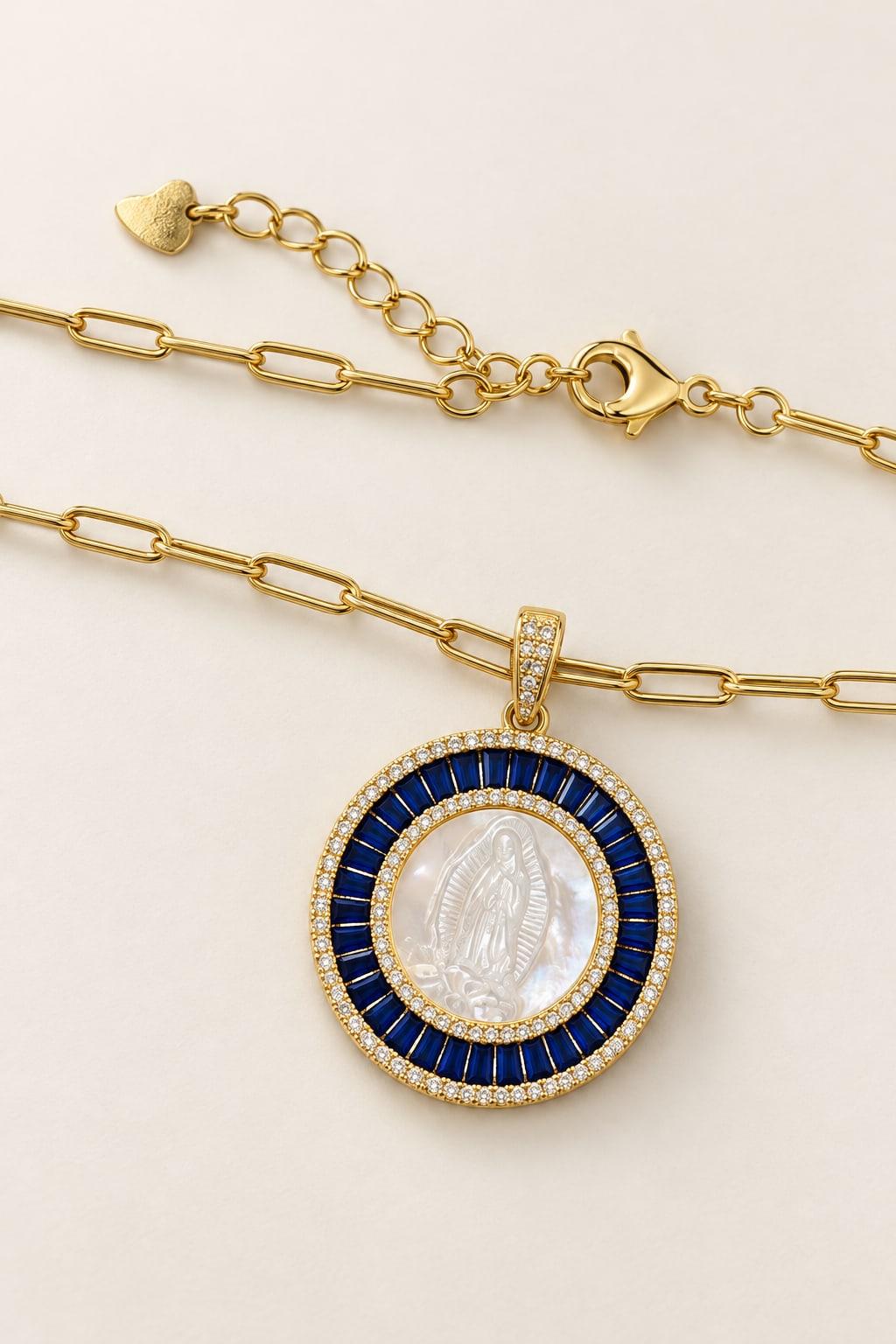
Mother-of-pearl is different again. It is the shiny inner layer of a shell, cut and carved into shapes, like the medal on Guadalupe. It has a pearly look, but it is not a pearl.
The 7 things that set a pearl’s quality
The Gemological Institute of America (GIA) grades pearls on 7 value factors. You do not need a loupe to use them. Just know what to look at.
- Size. Measured in millimeters across. 4-5 mm is small and delicate, 7-8 mm is a classic size, and 9 mm and up makes a statement.
- Shape. Round is the rarest. Near-round, oval, button, drop, and baroque (irregular) shapes cost less and have their own character.
- Color. The main color, plus any overtone, a faint second color that floats on the surface, such as rose on a white pearl.
- Luster. How bright and sharp the reflections are. GIA calls it the most important factor. A good pearl shows a clear reflection, and a poor one looks chalky.
- Surface. How free it is of spots, bumps, and lines. A few small marks are normal on a cultured pearl.
- Nacre quality. How thick and even the nacre is. Thick nacre lasts and glows.
- Matching. For pieces with more than 1 pearl, how well they match each other in size, shape, and color.
The metal matters too
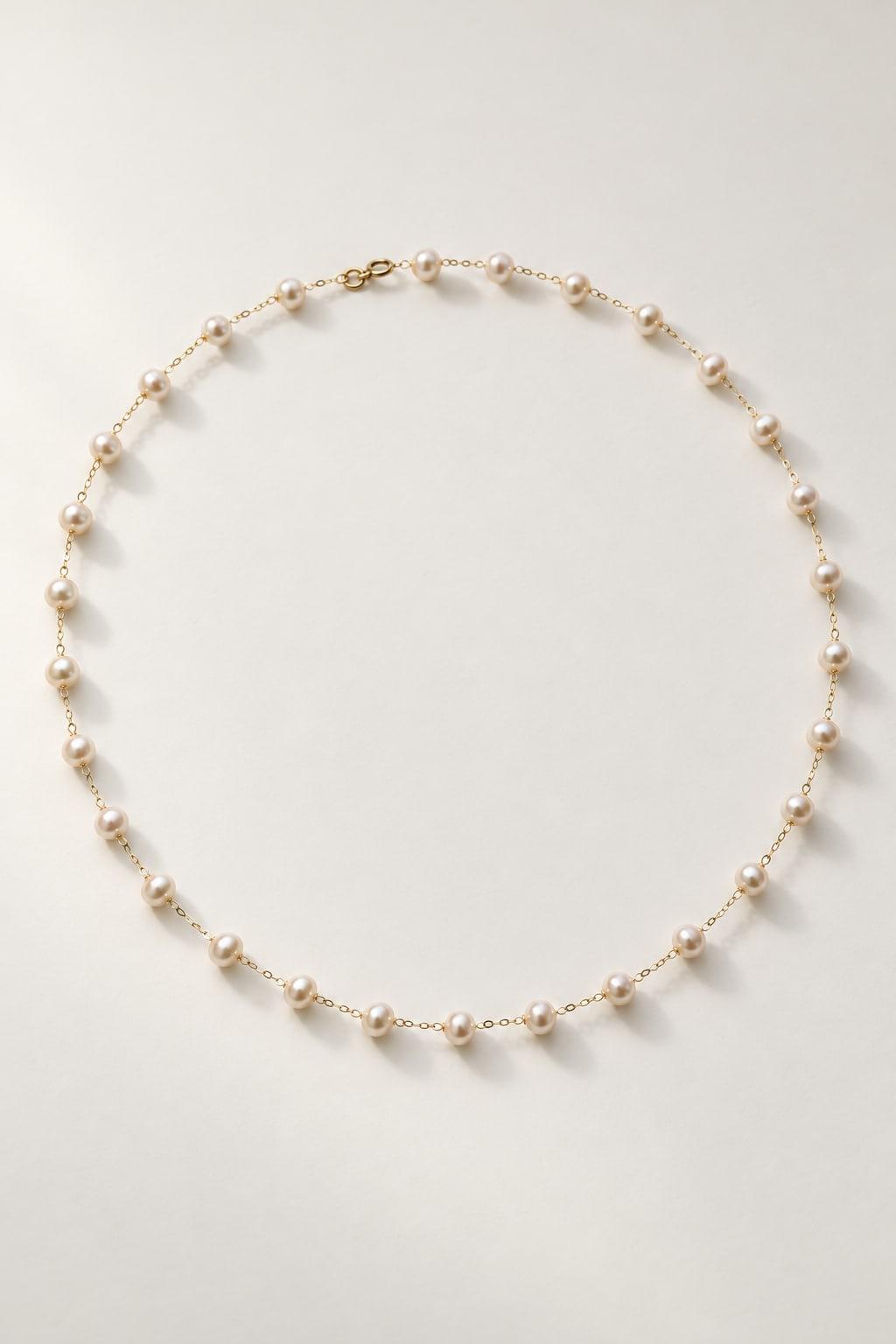
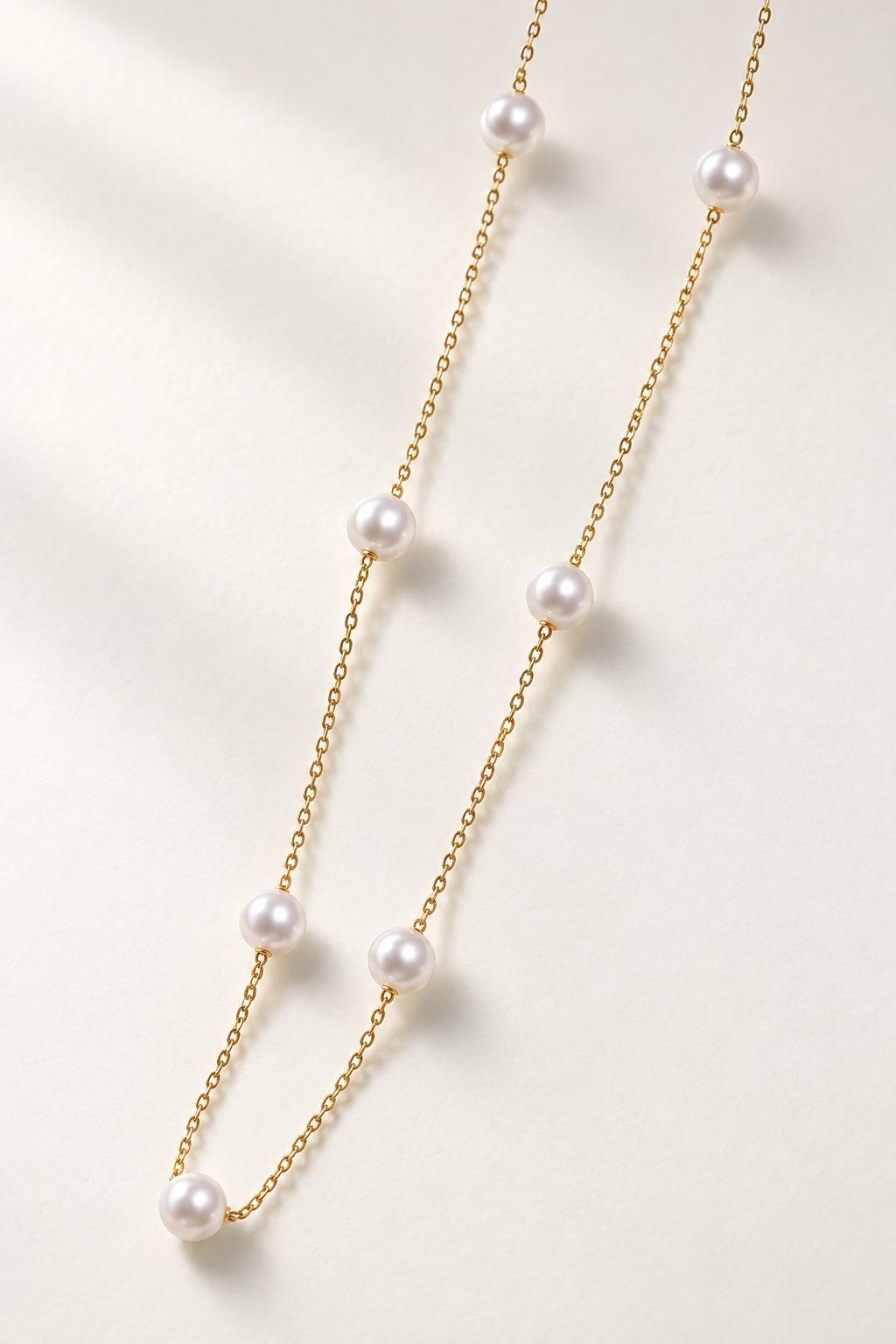
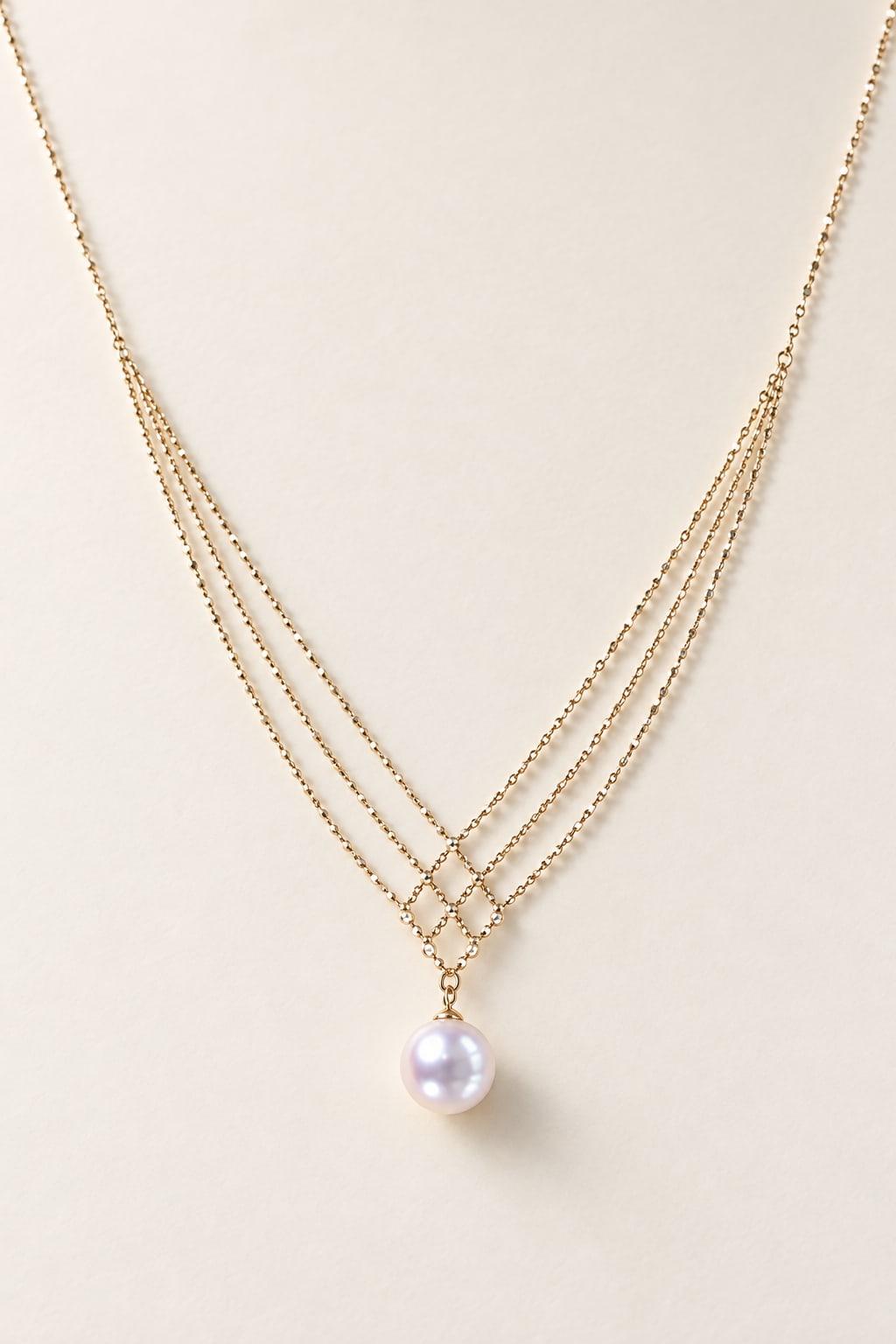
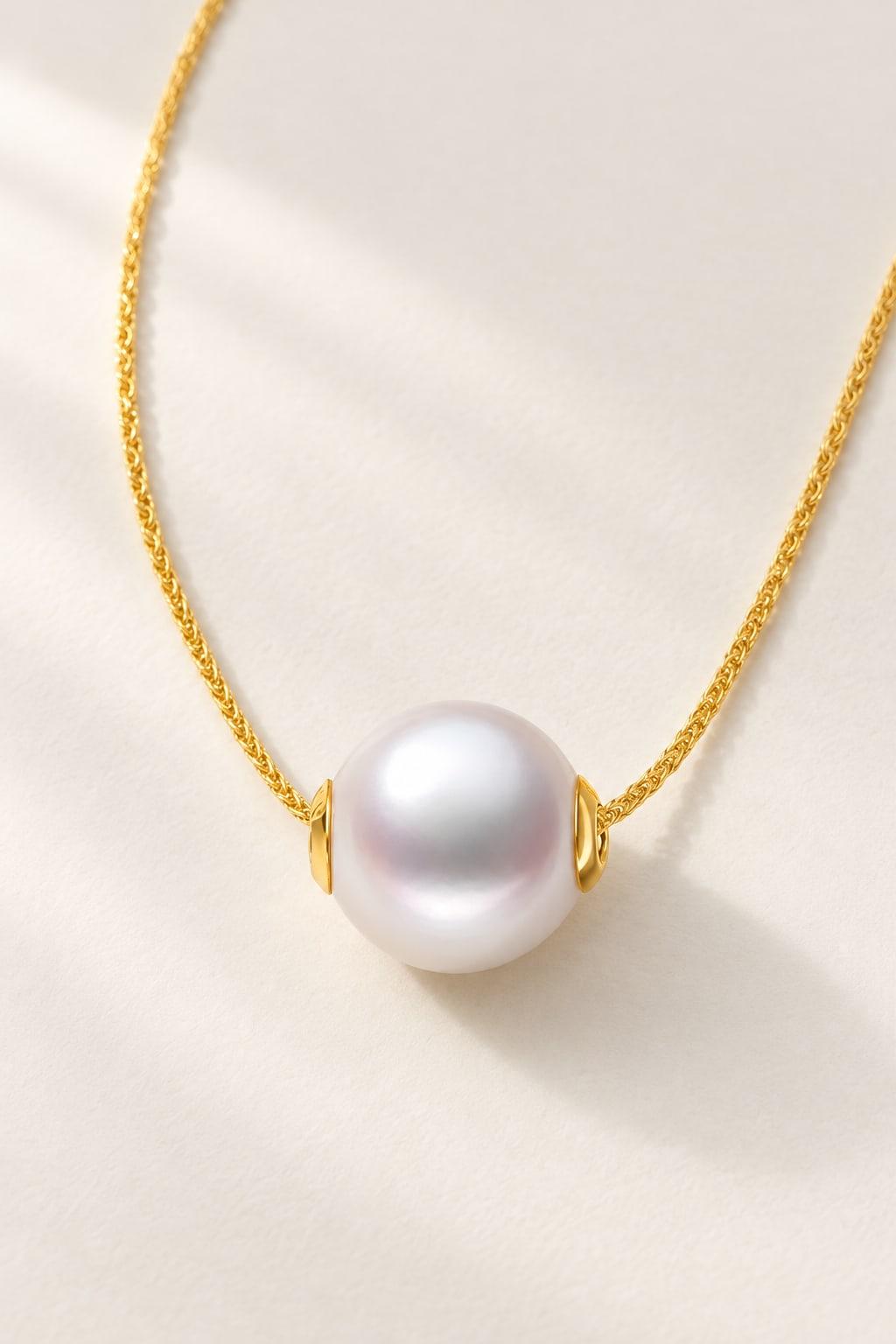
Read the listing for the metal as well as the pearl. "18K gold" means 75% pure gold, which is why it is often stamped AU750. "Solid gold" means the chain is gold all through. "Gold-plated" or "gold-tone" means a thin layer of gold color over another metal, which can wear with time. Nacre, Strand, and Seaglass set freshwater pearls on solid 18K gold chains stamped AU750. Tracery sets an 8-9 mm Akoya pearl in an 18K gold lace chain.
Choosing a length
- About 40 cm: sits at the base of the neck, close to the collarbone. Good with open necklines.
- About 45 cm: the most common length. It falls just below the collarbone, and suits most necklines.
- About 50-60 cm: falls to the top of the bust, and works over a crew neck or a sweater. A 60 cm chain, like Strand, can also be worn doubled.
When imitation pearls make sense
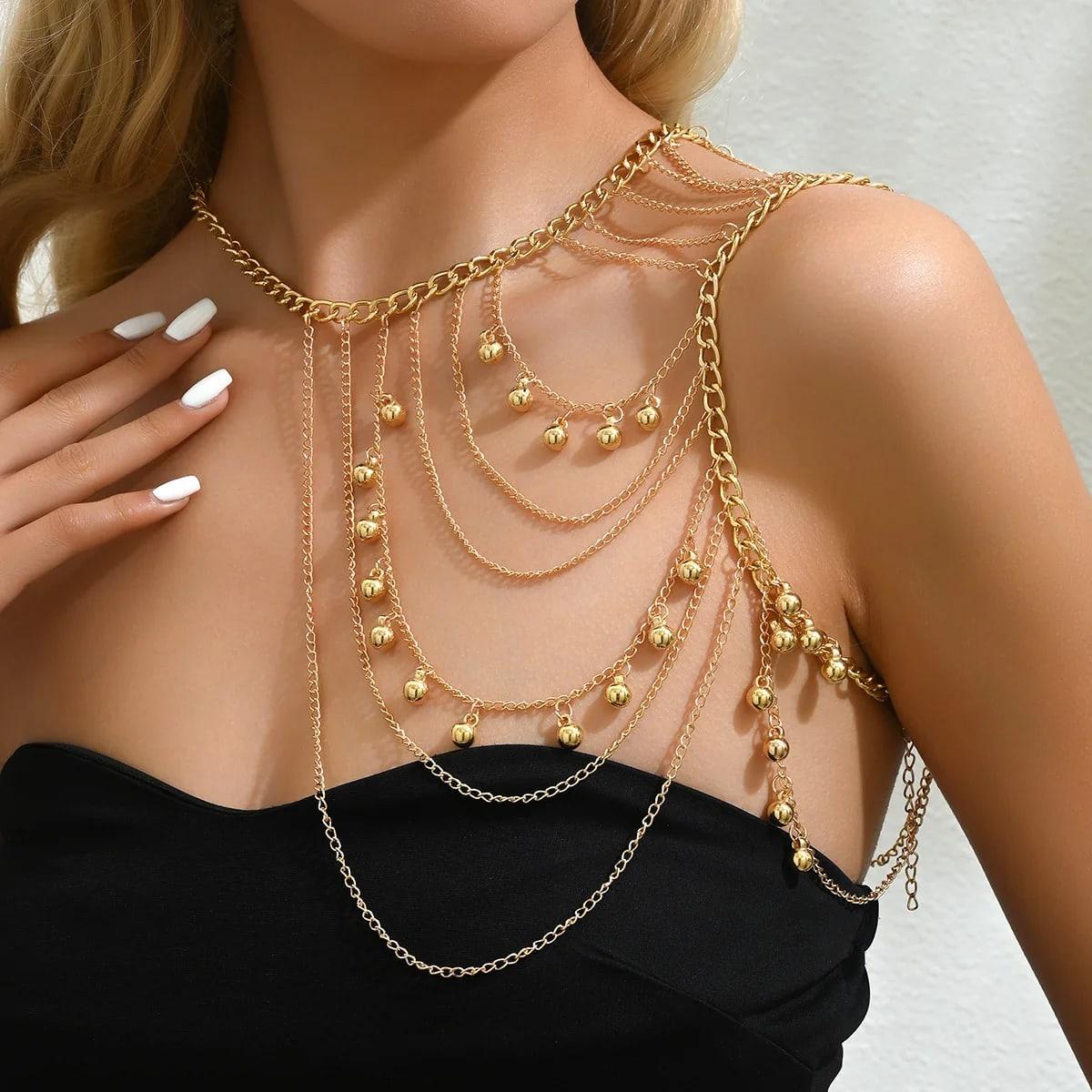
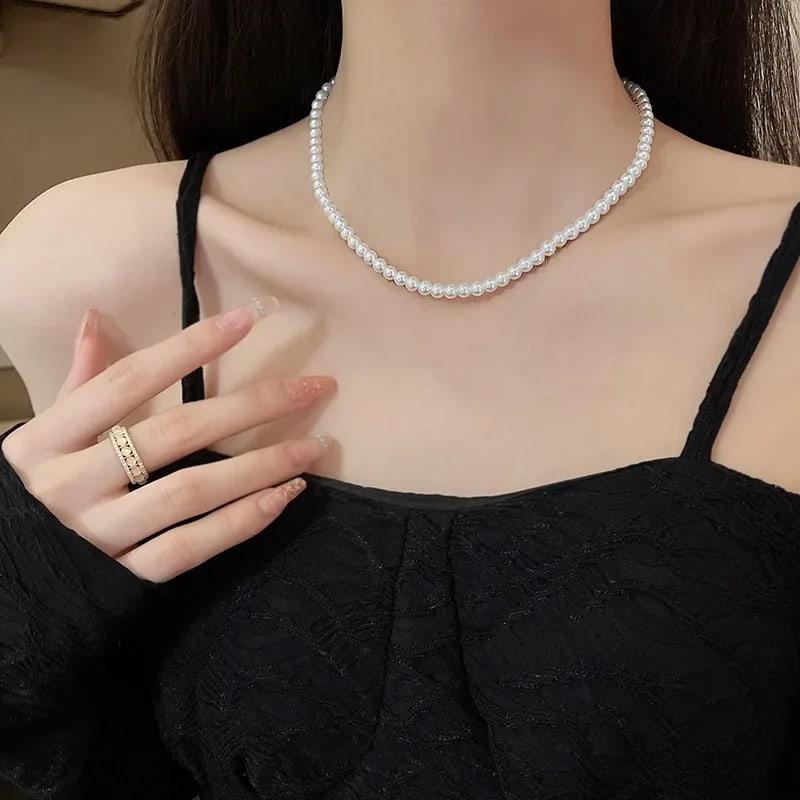
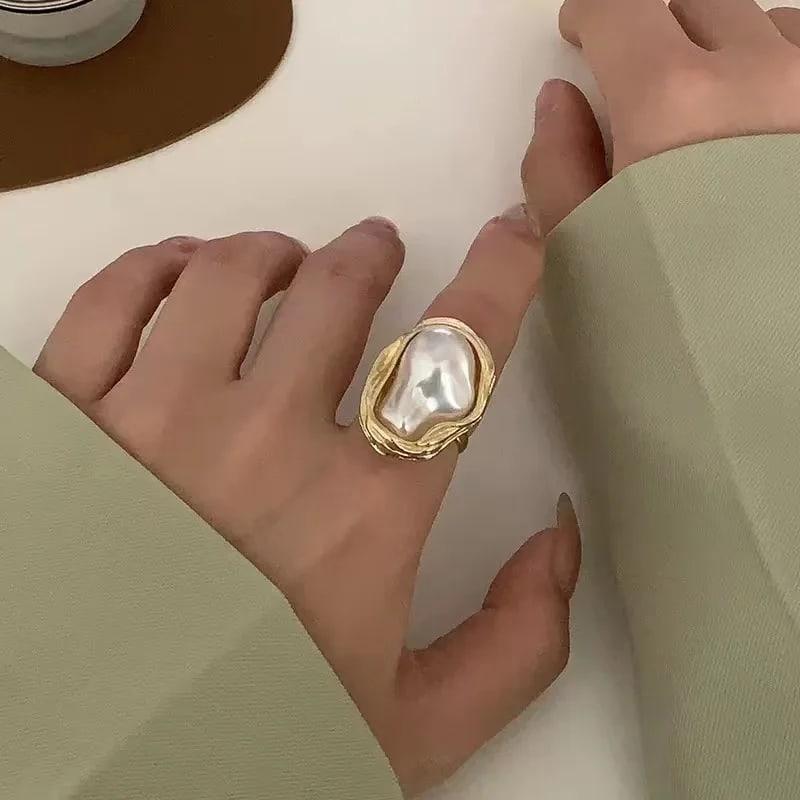
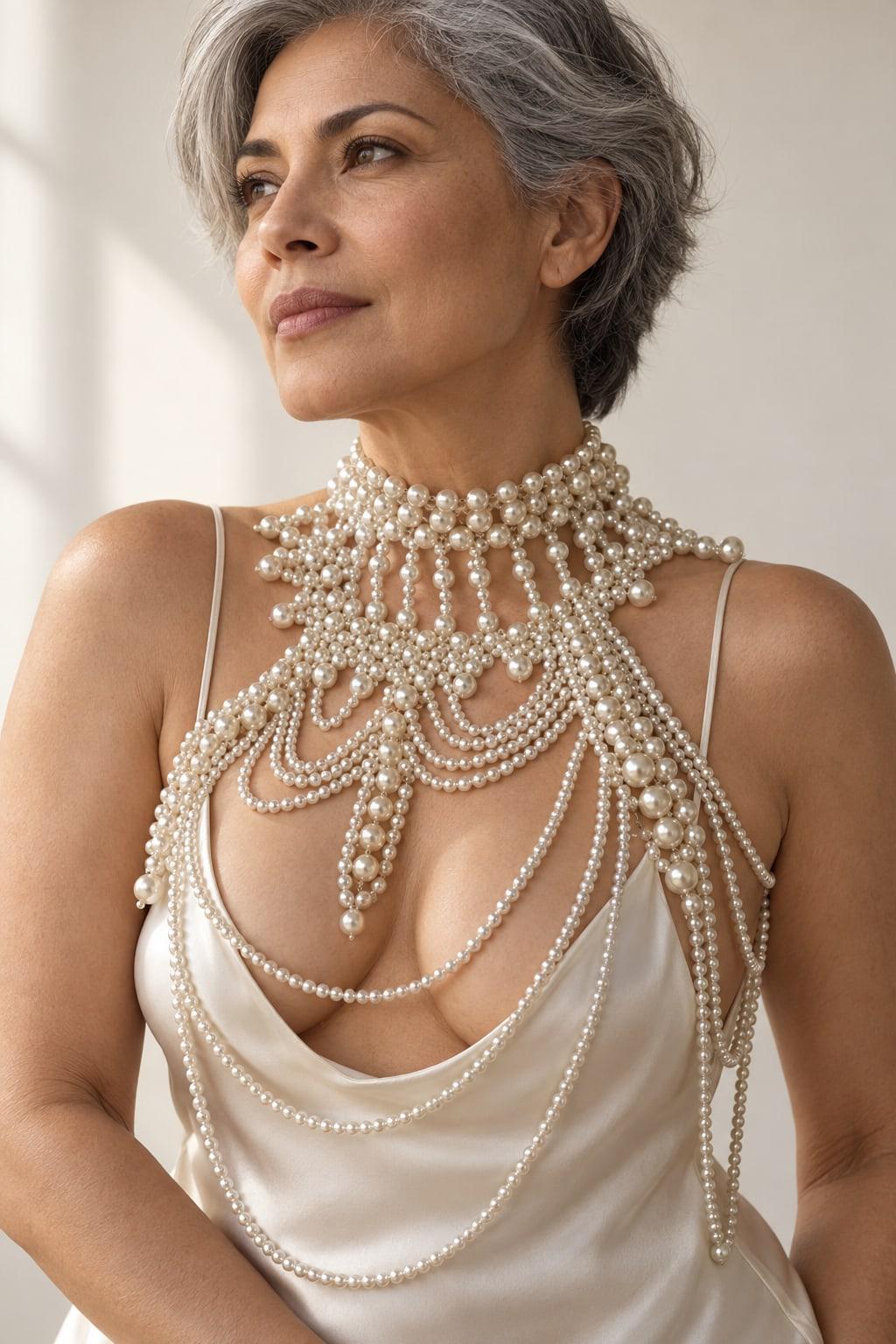
Imitation pearls are not a lesser choice when you know what you are buying. They are perfectly round and evenly matched, they cost little, and they are ideal for bold pieces that would cost a great deal in real pearls: a body chain, a bib choker, or a big baroque-style ring. Ariella is a collar of round simulated pearls in 4, 5, or 6 mm. Perrine sets an irregular imitation pearl on a gold-plated band. Oriel strings ABS pearls into a body chain for the shoulders and chest.
How to tell real from imitation
- Look closely. Cultured pearls show small differences in shape and surface. A strand of perfectly identical beads is usually imitation.
- Feel the temperature. Real pearls feel cool at first and warm up on the skin. Plastic pearls often feel light and warm from the start.
- Look at the drill hole. On imitation pearls, the coating can chip or peel around the hole.
- Try the tooth test. Rub the pearl gently along the edge of a front tooth. Real pearls usually feel slightly gritty, and imitations feel smooth. This is a rough guide, not proof.
Caring for pearls
Nacre is soft, so pearls need gentler care than gold or gemstones.
- Last on, first off. Put pearls on after makeup, perfume, and hairspray, and take them off before you undress.
- Wipe them with a soft, damp cloth after wearing, then let them dry.
- Never use an ultrasonic cleaner, a steam cleaner, or household chemicals.
- Store them on their own, in a soft pouch, so harder jewelry does not scratch them.
- Take them off before you swim, shower, or exercise.
Questions people ask
Are freshwater pearls real pearls?
Yes. They are cultured pearls grown in freshwater mussels. They are not imitation.
What size pearl is best for everyday wear?
Many people find 6-8 mm easy to wear every day. A single 8-9 mm pearl on a fine chain also works, as a quiet focal point.
Can I wear pearls every day?
Yes, with care. Keep them away from perfume and water, and wipe them after wearing.
Browse pearls and every other piece in women’s jewelry.
Sources
- Pearl, GIA
- Pearl description, GIA
- Pearl quality factors, GIA